What to Do With a Lifetime of Photos and Documents Before a Move

Commercial Moving
Residential Moving
Get Your Free Estimate
"*" indicates required fields






Most moves involve more paper than people expect. Family photos, tax records, and decades of forgotten documents do not pack like furniture. This guide covers how to sort, digitize, and protect them before move day. From archival packaging to climate-controlled storage, every step protects what cannot be replaced if something goes wrong.
Most moves involve more paper than people expect. Decades of family photos in albums and shoeboxes. Tax records that may or may not still be required. Letters, certificates, and the kind of documents that get tucked away and forgotten. None of these packs the way furniture does. None of it fits cleanly into a standard moving box. And none of it can be replaced if something goes wrong in transit. If you don’t know what to do with a lifetime of photos and documents before a move, professional moving companies, such as Neostart, have a solution.
Start Sorting Months Before the Move
Photo and document sorting takes longer than any other prep task. A weekend is rarely enough. Most households need several evenings to work through what has accumulated. Sorting works best in passes rather than one marathon session. The first pass identifies categories. The second pass makes keep-or-toss decisions within each category. The third pass packages keepers for transport or digitization. Trying to do everything at once produces fatigue and bad decisions.

Decide What Stays in Paper Form
Some documents need to stay in paper form. Original birth certificates, marriage certificates, naturalization papers, original deeds, vehicle titles, and notarized documents all fall in this category. Tax records have specific retention requirements that the IRS guidance on recordkeeping covers in detail.
Other categories often get digitized, and the originals are discarded. Old utility bills, expired warranties, manuals for appliances long gone, and similar paperwork rarely need to make the move. Sorting before the move is the difference between transporting useful records and transporting decades of clutter.
Photos Need Their Own Plan
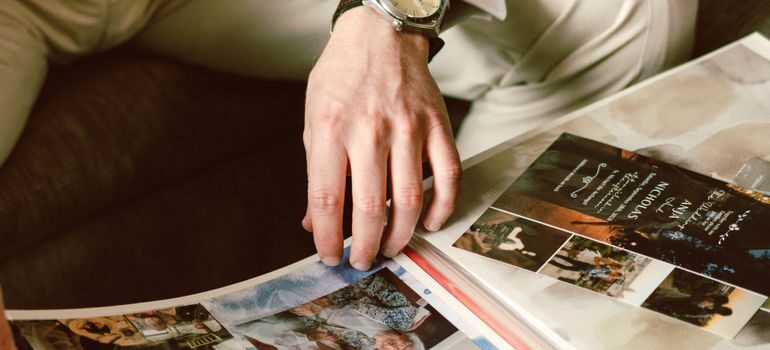
Family photos are the hardest category for most households. Albums from grandparents. Loose photos in shoeboxes. School pictures, vacation prints, wedding albums, and the kind of photos that span generations all need handling.
The first decision is whether to digitize. Scanning services can convert thousands of photos to digital files for backup. The originals can then travel with less anxiety since digital copies exist. Some households scan only the most irreplaceable photos and leave the rest in albums for transport. So, if you don’t know what to do with a lifetime of photos and documents before a move, scanning is one of the solutions.
Pack Paper Carefully
Paper does not survive moves as easily as customers expect. Humidity, temperature swings, and rough handling can all damage decades-old documents and photos. Standard cardboard moving boxes are not designed for archival protection.
The right approach uses acid-free archival boxes for important documents and photos. Bubble wrap, packing paper, and waterproof bags add layers of protection. Boxes containing original documents should travel in the cab of the truck or in the family vehicle. The moving truck is not the right place for irreplaceable papers.
Use Storage for Items That Need Time
Some sorting decisions cannot happen before move day. Boxes of mixed photos and documents may need months of evening work to fully process. Bay Area storage solutions bridge the gap with short-term and long-term capacity. Climate-controlled options protect photos and documents from temperature swings during the wait.
This works well for senior downsizing situations where the volume of accumulated paper exceeds what a quick sort can handle. Items stay in stable storage until the family has time to work through them properly.
Coordinate With Senior Family Members
A meaningful share of moves involve senior family members who have accumulated decades of photos and documents. These sorting projects carry emotional weight. Each item may trigger memories that slow the process.
Specialized senior moving services bring patience and careful pacing to these transitions. Family members often work alongside the senior during sorting. The team handles the physical move while the family handles the emotional curation. The pace of sorting matters as much as the move itself.
Protect Items in Transit
The most important documents travel separately from the moving truck. Originals of birth certificates, passports, deeds, and similar papers should stay in the family vehicle. So should any irreplaceable photos that have not been digitized.
For documents and photos traveling with the moving truck, clear labeling protects them. A box marked “fragile, photos” gets handled differently than an unlabeled box. Crews handling Bay Area residential moving projects know to give these boxes extra care during loading and unloading.
What to Do With What You Discard
Some documents cannot just be thrown in the trash. Old tax records, bank statements, medical bills, and anything with personal information should be shredded rather than discarded whole. Many communities offer shredding events during tax season and other times of year. Old photographs that nobody wants present a different challenge. Some families donate vintage photos to local historical societies if the subject matter has community value. Others simply recycle them. The choice depends on what the photos document.
Set Up a Document Station at the New Home
The first week in the new home is the right time to set up a permanent system. Surviving documents need a stable filing location. A filing cabinet, document safe, or organized drawer all work as long as the location is stable and protected. The system that works long-term is the one that gets used regularly. Stuffing surviving documents back into shoeboxes after the move guarantees the same problem in five or ten years. Setting up a real organization system at the new home prevents that.

Plan the Photo and Document Layer Into Your Move
Photos and documents rarely get the attention they deserve during a move. Furniture and dishes dominate the planning, while the paper layer gets pushed to the last week and ends up rushed. A better approach folds photo and document handling into the move plan from the very start. Sorting begins months ahead, digitization happens during the planning phase, archival packaging protects what travels, and storage holds what needs more time. Knowing what to do with a lifetime of photos and documents before a move turns the most fragile part of any relocation into the most prepared part. Plan the paper layer of your move with the right team. Contact Neostart for a written estimate.
Frequently Asked Questions
How early should photo and document sorting start before a move?
Several months ahead is the safest baseline. Photo and document sorting takes longer than any other prep task. Most households need several weeks of evenings to work through what has accumulated. Starting late produces fatigue, bad decisions, and items that get thrown out by mistake.
Which documents need to stay in paper form?
Original birth certificates, marriage certificates, naturalization papers, original deeds, vehicle titles, and notarized documents all stay in paper form. Tax records follow specific federal retention requirements before they can be discarded. Other paperwork like old utility bills and expired warranties often gets digitized or thrown out.
Are standard cardboard moving boxes safe for old photos?
No. Paper does not survive moves as easily as customers expect. Humidity, temperature swings, and rough handling can all damage decades-old documents and photos. Acid-free archival boxes paired with bubble wrap, packing paper, and waterproof bags give important items the protection cardboard cannot.
Should irreplaceable photos travel with the moving truck?
The most important photos and documents travel separately from the truck. Originals belong in the family vehicle, along with passports, deeds, and similar papers. Items that have been digitized can travel with the truck since digital copies exist as backup.
Can storage help when sorting takes longer than the move timeline?
Yes. Boxes of mixed photos and documents sometimes need months of evening work to fully process. Climate-controlled storage protects items from temperature swings during the wait. Senior downsizing situations especially benefit, since the accumulated paper volume often exceeds what a quick sort can handle.
Joy Patzner


David and his crew were wonderful. Very nice and VERY fast!!!

locations we serve
Alameda County

San Francisco County
Contra Costa County
San Mateo County