How to Move a Refrigerator Without Damaging It



Commercial Moving
Residential Moving
Get Your Free Estimate
"*" indicates required fields






Knowing how to move a refrigerator safely involves emptying and defrosting it, measuring the exit route, and securing it upright with an appliance dolly and truck straps. Transport position and the model’s instructions determine how long it should stand before being plugged back in.
To move a refrigerator safely, empty and defrost it, protect the doors and finish, and use an appliance dolly to keep it upright and supported. Dragging it across the kitchen or lifting it by the handles can damage both the appliance and your home. Knowing how to relocate a refrigerator also means checking that it fits through every doorway before disconnecting it. For a Bay Area move, Neostart can help with the heavy lifting and careful handling!
How Do You Prepare a Fridge the Day Before?
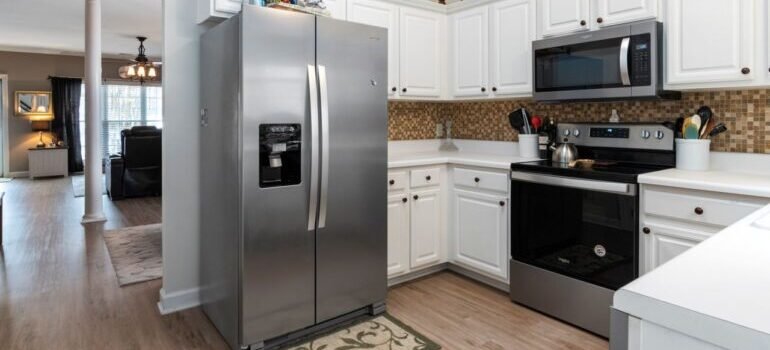
Empty, disconnect, defrost, and dry the refrigerator before moving day. Start earlier if the freezer has heavy ice buildup: the appliance needs enough time to thaw completely, drain, and dry before wrapping.
Remove Food and Defrost the Freezer
Use up perishables before the move and arrange another refrigerator or an ice-packed cooler for anything you plan to keep. Remove frozen food and empty the ice bin so melting ice cannot leak during transport.
Turn off the cooling controls, unplug the appliance, and leave the doors open while it defrosts. Place towels around the base and check them regularly. Never chip ice away with a knife or screwdriver; sharp tools can puncture the liner or damage refrigerant tubing.
Disconnect the Water Supply
For a refrigerator with an ice maker or water dispenser, locate the shutoff valve before pulling the appliance forward. Close the valve, switch off the ice maker, and disconnect the supply line according to the model’s manual. Keep a shallow container and towels ready for residual water.
Avoid stretching the line as you move the refrigerator away from the wall. If the valve will not close or the connection is corroded, have a plumber handle the disconnection. Whirlpool recommends shutting off the ice maker’s water supply at least one day before moving.
Clean and Pack Removable Parts
Wash the interior with a mild cleaner, wipe the door gaskets, and dry corners where water collects. Remove glass shelves, drawers, and door bins where the manual allows.
Wrap glass pieces individually, cushion their edges, and label the box “Fragile—Refrigerator Parts.” Booking professional packing services in Bay Area can help protect these components alongside other breakable kitchen items.
Keep mounting clips and removable fittings in a labeled bag. Secure the power cord so it cannot trail beneath the appliance or catch on a doorway.
Measuring Doors, Halls, and Stairs
Measure the refrigerator and its entire exit route before moving it away from the wall. Repeat the process at the destination: getting the appliance out of your current kitchen does not guarantee it will fit into the next one. Record measurements in inches and keep them available on moving day.

Measure the Appliance at Its Widest Points
Check the refrigerator’s height, width, and depth, including handles, hinges, and any protruding connections. Manufacturer specifications may list several depths, so confirm which measurement includes the doors and handles.
Measure again with moving blankets in mind, since padding adds bulk. If removing handles or doors is necessary, follow the model’s instructions. Some doors contain wiring and water connections that require careful disconnection.
Check Doorways and Tight Turns
Measure the usable doorway opening with the door fully open, rather than measuring between the outer edges of the frame. Include hallway corners, kitchen islands, low light fixtures, and thresholds along the route.
A refrigerator may fit through a doorway but still lack room to turn into a narrow hall. Check the approach and exit space on both sides. Give your Bay Area residential movers these measurements and photos of tight corners before moving day so they can plan the route and equipment.
Assess Stairs and Landings
Record the narrowest stair width between handrails, the landing dimensions, and overhead clearance. Allow room for the appliance dolly and the people controlling it.
If the refrigerator cannot turn safely on a landing, stop and arrange another route or professional handling. Do not remove handrails or force the appliance beneath a low ceiling to make it fit.
Should a Fridge Travel Upright or on Its Side?
Keep the refrigerator upright during transport. This position helps protect the cooling system and reduces the chance of compressor oil migrating into refrigerant lines. Choose a truck with enough interior height to accommodate the appliance standing up, including clearance through the cargo opening.
If you are deciding how to move a refrigerator in a vehicle with limited height, check the manufacturer’s transport instructions before loading. A short drive does not make an unsuitable position safe.
Side Transport Depends on the Model
There is no universal “safe side” for every refrigerator. GE allows certain top-freezer and side-by-side models to travel on a specified side, while its French-door, bottom-freezer, and built-in models must remain upright. Whirlpool’s moving guidance also recommends upright transport. These differences make the instructions for your exact model essential.
Find the model number on the appliance label and check the manual’s moving instructions. If side transport is prohibited, arrange a taller vehicle. Do not assume advice for another refrigerator applies to yours.
Distinguish Tilting From Laying It Flat
Briefly tilting a refrigerator on an appliance dolly to negotiate a doorway is different from transporting it horizontally. Keep the tilt controlled and follow any model-specific restrictions.
Never use the doors or handles as lifting points. Avoid resting the appliance on its front, where its handles and finish can be damaged, or on its back, where exposed components may be crushed. Record any time spent on its side so you can follow the correct restart instructions after delivery.
Loading and Securing It in the Truck
Use an appliance dolly rated for the refrigerator’s weight, with an integrated securing strap. Check the appliance specifications and the dolly’s load rating before starting. Have enough help to control the load throughout the route; stairs and steep ramps require experienced handling.
Protect the Floor and Position the Dolly
Lay rigid floor protection along the kitchen exit route, keeping sheets flat and secure. Raise the leveling feet according to the manual before rolling the refrigerator straight out. Avoid rocking it from side to side, which can damage flooring.
Cover the exterior with clean moving blankets, paying attention to corners. Position the dolly against the side permitted by the manufacturer, keeping its base clear of tubing and other exposed components. Tighten the dolly strap enough to prevent shifting without crushing panels.
For a refrigerator surrounded by a kitchen island or other bulky items, furniture movers in Bay Area can coordinate the removal order and keep the exit route clear.
Move Up the Ramp Under Control
Check that the truck’s ramp is properly attached, dry, and rated for the combined load. Keep the path clear and maintain communication between everyone handling the appliance.
Move slowly without sudden changes in direction. Nobody should stand directly downhill from an unsecured refrigerator. If the load becomes difficult to control, stop at a stable position and reassess the equipment and approach.
Tell your Bay Area local movers about sloped driveways, curbside loading restrictions, or steps between the kitchen and truck before arrival so they can plan suitable access.
Secure It for the Drive
Position the refrigerator upright against a suitable padded truck wall. Use rated cargo straps attached to designated anchor points to prevent forward, backward, and sideways movement.
Keep straps away from handles, hinges, and exposed rear components. Do not rely on nearby boxes to hold the refrigerator in place, and keep heavy cargo from pressing against its doors.

How Long to Wait Before Plugging It Back In
Follow your refrigerator’s model-specific restart instructions. The waiting period depends on its design and transport position, so a blanket “wait 24 hours” rule will not suit every appliance. Leave it standing upright while you confirm the correct interval.
Match the Waiting Time to the Transport Position
GE advises leaving eligible refrigerators upright for as long as they spent on their side, up to 24 hours. For example, three hours of side transport means three hours standing upright before reconnecting power. LG’s general transport guidance recommends 24 hours upright after transport that could not be completed upright. Your model’s manual takes priority over these general examples.
If the refrigerator stayed upright throughout the move, check its installation instructions for the required settling time. If you cannot confirm how it traveled, contact the manufacturer before switching it on.
Check Placement Before Restarting
Set the appliance on a stable floor, adjust its leveling feet, and leave the ventilation clearances specified in the manual. Check that the power cord and water line are not trapped beneath it.
If your delivery dates do not align, arrange storage in Hayward CA with suitable conditions for the appliance. Store it empty and dry, with the doors safely secured ajar for airflow.
Once connected, let the compartments reach their recommended operating temperatures before returning food. Before returning food, use an appliance thermometer to confirm that the compartments meet FDA food storage recommendations: 40°F or below in the refrigerator and 0°F in the freezer.
Know How to Move a Refrigerator Without Costly Damage
Knowing how to move a refrigerator starts with preparing it before moving day and checking the route at both homes. Keep it upright, protect removable parts, and secure it properly for the drive. Before reconnecting power, follow your model’s instructions for placement and settling time. Neostart can help coordinate your Bay Area move and handle bulky items along the way. Contact our team to discuss your refrigerator, access restrictions, and moving date, and request an estimate.
Frequently Asked Questions
Can you move a refrigerator without defrosting it?
Defrost the freezer before moving if ice has accumulated. Remaining ice can melt during transport, wetting protective materials and the truck floor. Allow enough time for the interior to thaw and dry completely.
Can you move a refrigerator by yourself?
A refrigerator’s weight and height make it difficult to control alone, especially on ramps or stairs. Use an appliance dolly rated for its weight and enough experienced help to keep the load stable throughout the route.
Do refrigerator doors need to be removed before moving?
Only remove the doors if necessary to clear the route or required by the manufacturer. Measure first, and follow the model’s instructions because doors may contain electrical wiring and water connections.
Can you lay a refrigerator on its side during transport?
Keep it upright whenever possible. Some manufacturers permit specific models to travel on a particular side; others require upright transport. Check your exact model’s manual before laying it down.
How long should you wait to plug in a refrigerator after moving?
Follow the manufacturer’s instructions for your model and transport position. Side transport may require several hours upright before restarting. After switching it on, wait until the compartments reach their recommended temperatures before adding food.
Joy Patzner


David and his crew were wonderful. Very nice and VERY fast!!!

locations we serve
Alameda County

San Francisco County
Contra Costa County
San Mateo County