Steps to Prepare for Effective Office Relocations



Commercial Moving
Residential Moving
Get Your Free Estimate
"*" indicates required fields






A well-prepared office relocation comes down to a clear sequence of steps: building a moving plan, notifying staff and stakeholders, packing and protecting equipment, coordinating logistics at the new building, and prioritizing safety on move day. Following these steps ahead of time keeps the move organized and reduces business disruption.
Moving an office involves more than packing boxes and updating addresses. People, schedules, and equipment all need to move in coordinated steps. So, any one of them can fall behind if the move is not handled right. The Bay Area adds its own complications, from tight loading zones and freight-elevator schedules to building access rules that vary block by block. The steps below outline a clear sequence for preparing an effective office relocation. It is the same approach Neostart follows to keep moves predictable from the first planning meeting to the final box.
Step 1: Create a Clear Office Moving Plan
Every successful office relocation starts with a solid plan. Without one, things get missed or delayed, and that disrupts the team’s work. Choose a moving date that fits the business calendar. However, also avoid heavy traffic times and end-of-month lease turnover, when Bay Area buildings book up fastest. Assign specific tasks to each department or point person; when everyone knows what they are responsible for, nothing gets left behind. Set a clear timeline that marks key milestones such as when packing begins, when IT gear is disconnected, and when the new workspace must be ready.

A steady schedule keeps the pressure down and gives everyone a sense of direction during what can otherwise feel like a hectic time. Make sure all resources, including packing materials and updated floor plans, are available for everyone who needs them. For businesses bringing in experienced office movers in the Bay Area, the process becomes a guided checklist rather than a guessing game.
Step 2: Notify Staff and Stakeholders Early
Good communication helps avoid confusion, especially when workspaces shift and routines change. Inform staff well in advance of the moving day, with enough lead time for questions and coordination. Share the move date and new address with vendors, service providers, and delivery partners. That way, the bills and packages reach the right place. Update your Google Business Profile, social media, website footer, and any printed materials with the new address before move day rather than after.
Preparing others for the change keeps the business running without unexpected hiccups, and it helps contacts plan accordingly. For Bay Area businesses with hybrid teams, confirming remote-work coverage for the move day itself prevents the productivity loss that compounds when nobody knows whether to log on.
Step 3: Pack Smart and Protect Office Items
Office equipment is unforgiving when it is not packed carefully, and small details prevent costly damage and unnecessary downtime. Use strong, double-walled boxes or labeled bins to separate items by department or type. Electronics and tech gear should get extra padding and outer protection, especially during transitions between the truck and the building. Cover items during loading and unloading whenever conditions outside are less than ideal.
Specialty packing matters most for electronics, file cabinets, confidential documents, and office artwork, where the right materials need to be matched to each item. Fine arts movers Bay Area can help with the process. Take time to inventory everything before move day so nothing gets lost or misplaced once the boxes start flowing.
Step 4: Consider Logistics at the New Office
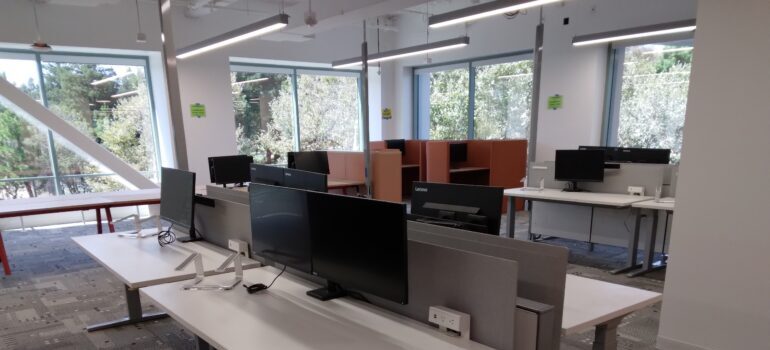
Sorting out logistics ahead of time keeps surprises to a minimum. Check with the new building about available loading areas, freight-elevator access, and move-in restrictions. Many Bay Area properties limit moving hours and require advance scheduling. Confirm that power, internet, and other essentials will be active before the team arrives. Nothing slows a day down like trying to work without Wi-Fi. Think through how the new layout will function and confirm where desks, offices, and equipment should go, so items land in the right place the first time.
Coordinating directly with building management to secure move-in permits, reserve elevators, and handle required insurance documentation is part of any well-prepared relocation. A detailed walkthrough of the new space ahead of move day always pays off. Reassembling modular workstations is one of the slowest parts of any office move. A professional office cubicle installation service completes each workstation in roughly thirty to forty-five minutes, including cable management and panel alignment.
Step 5: Keep Safety and Comfort in Mind
Office moves involve heavy lifting, busy walkways, and tight schedules, all of which raise the risk of injuries when corners get cut. Prioritizing safety keeps morale high while reducing injury risk. Keep entryways and hallways dry and clear, since slick floors cause slips, especially when people are carrying heavy items. Provide a comfortable space where staff and movers can take breaks, with snacks, bottled water, and coffee available. Check lighting at both the old and new spaces, because dim corners or outdoor loading areas can turn risky during longer shifts.

Per OSHA general industry safety guidance, proper footwear, lit walkways, and clear pathways are the simplest and most effective ways to prevent slip-and-fall incidents during physical work. These small adjustments make a long day feel manageable rather than chaotic.
Bringing the Steps Together
A well-executed office relocation comes down to planning, strong communication, and thoughtful timing. The five steps above work as a sequence, not a menu, and each one builds on the last. By following them ahead of move day, businesses avoid disruptions, keep operations on track, and give teams the chance to settle into the new space without losing productive time. With the right steps in place from the start, the move becomes manageable rather than chaotic. Get in touch with Neostart to start mapping out the plan.
Frequently Asked Questions
What happens if the new office is not fully ready on move day?
Build-out delays, network provisioning waits, and pending inspections all delay move-in occasionally. Storage bridges the gap when the new space is not ready. Climate-controlled options protect electronics and wood furniture during the wait. The same crew handles the load, the storage, and the eventual delivery.
Can a single team handle furniture, IT equipment, and cubicle reassembly?
Yes. A coordinated crew handles workstation disassembly, transport, and reassembly along with the rest of the office contents. Modular cubicle reinstallation typically runs thirty to forty-five minutes per workstation including cable management and panel alignment. One team and one timeline avoid handoff problems between vendors.
Who handles building documentation like Certificates of Insurance?
The moving company handles the Certificate of Insurance, additional insured endorsements, and other building documentation. Submission usually happens forty-eight to seventy-two hours before move day. The tenant confirms each building's specific requirements at lease signing and shares them with the moving team early.
Joy Patzner


David and his crew were wonderful. Very nice and VERY fast!!!

locations we serve
Alameda County

San Francisco County
Contra Costa County
San Mateo County